Nice People in Kerala
I’m wrapping up several days in Kerala, a state on India’s western coast that’s home to some 35 million people. My mom joined me in Bombay on Sunday, and we flew to Kochi, the capital of Kerala, on Tuesday morning. From the airport we took an Uber to our homestay in Fort Kochi, which took over an hour. We immediately noticed how Kochi seemed less crowded than Bombay and Northern India. Yes, there are still lots of people, but in general traffic is well-behaved (despite roads being narrow) and we saw almost no slums. The air, however, was still a fairly noxious gray, with an AQI of 130.
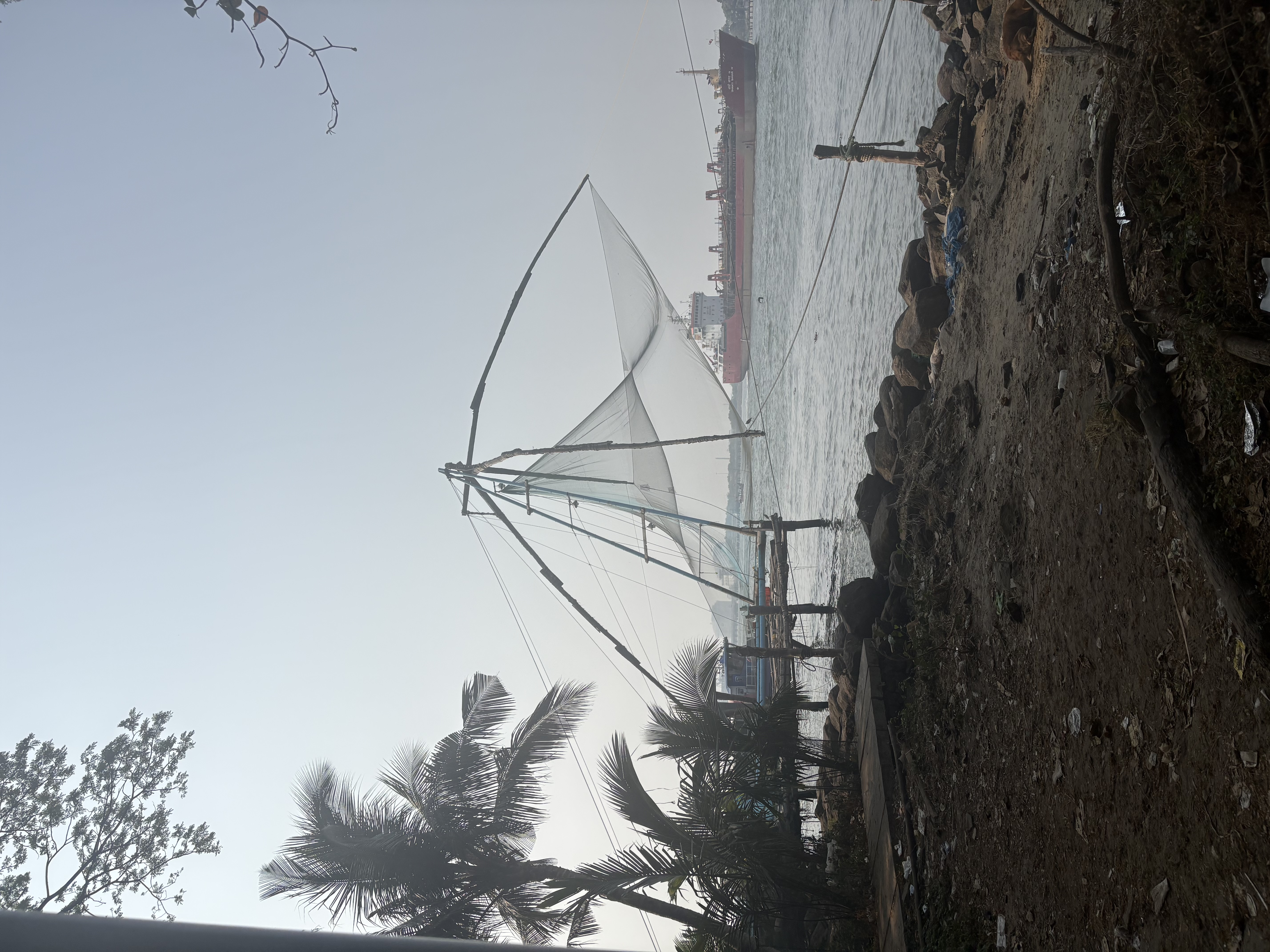
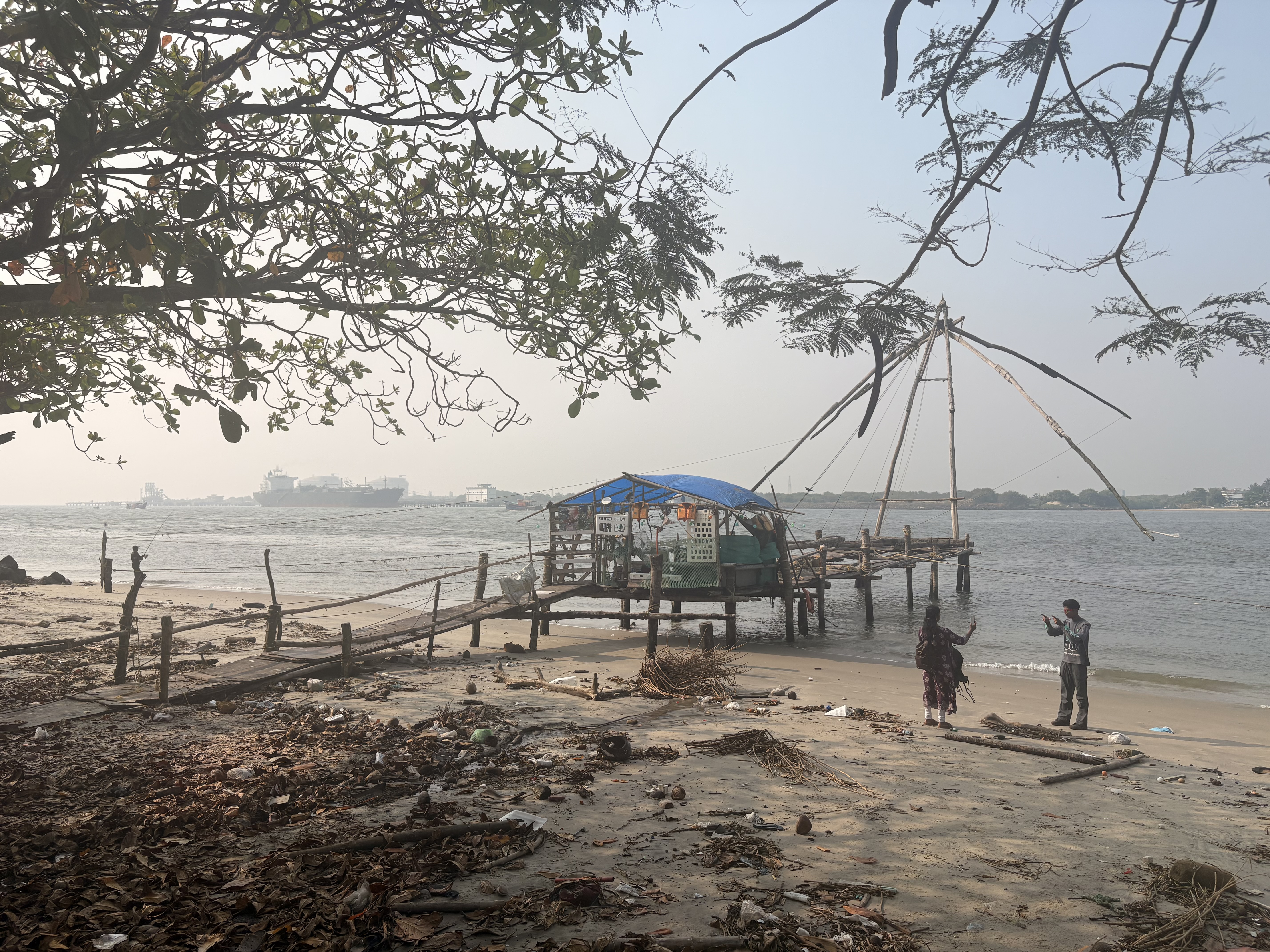
We stayed in Fort Kochi, named for the fort erected by the Portuguese when they colonized Kerala in the 16th century. Fort Kochi contains one of the oldest churches in India, and also one of the oldest synagogues. The Portuguese, as usual, were excellent at proselytizing, and to this day around 30% of Kerala is Christian. However, as multiple people we talked to told us, there isn’t any strife between the religions: “nice people in Kerala” is the refrain we heard. This is also where I heard the first anti-Modi sentiment I’ve heard on this trip. “He’s only building up Hindu areas,” a (Hindu) guide told us. That tracks.
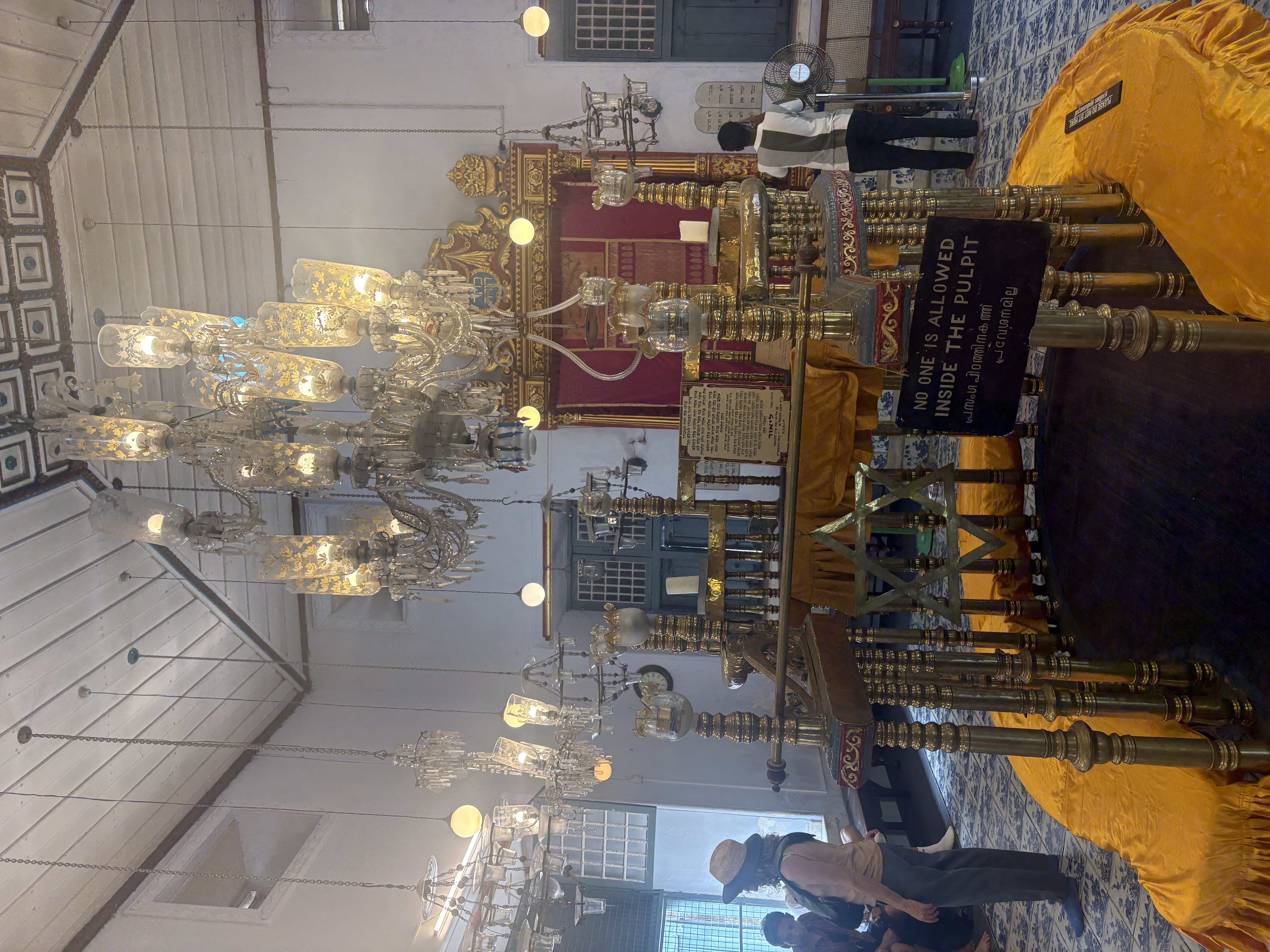
Back to the synagogue. Apparently, Jews arrived in Kerala after the destruction of the second temple. These were dark-skinned Jews (Malabari Jews), unsurprisingly, and while they suffered discrimination at the hands of the Portuguese they were not fully converted to Catholicism. Then, in the 15th century, more Jews arrived fleeing the inquisition; these were the light-skinned Jews (Paradesi Jews) who constructed the synagogue. Predictably, Malabari Jews did not have full rights within the Paradesi Synagogue.
There is now one Jew left in Fort Kochi. We did not meet him. We did learn about Sarah Cohen, one of the other last Jews in Kochi, who passed away recently at 96. Her home has been converted into a museum and shop, with information about her life and various overpriced embroidered challah covers. My mom bought two. I was, however, tickled by the salesperson’s shirt, which, amid this shrine to India’s vanishing Jewry, bore the caption “Titles for your sex tape” followed by a list of NSFW titles.
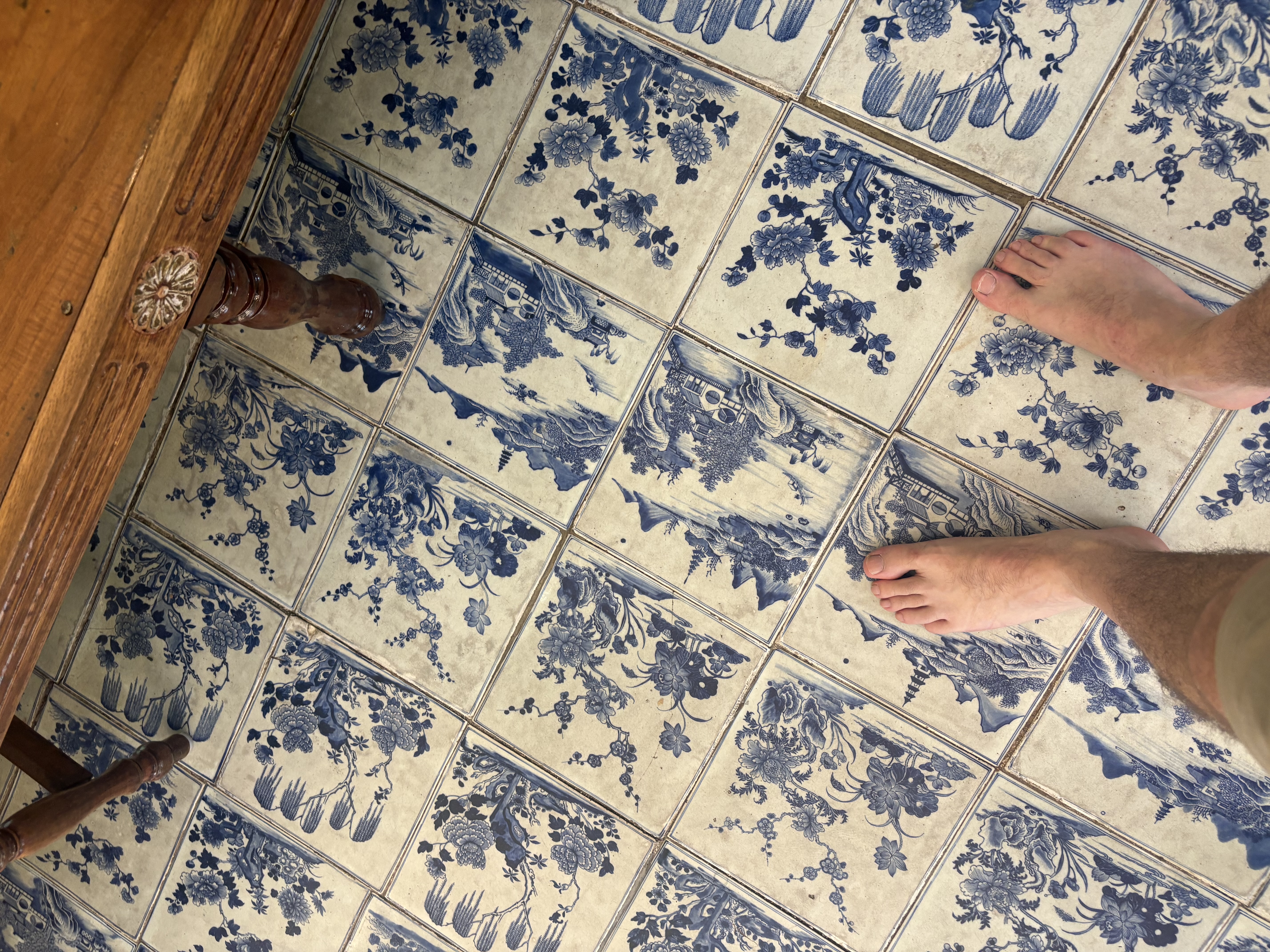
The synagogue, erected by Sephardic Jews in the 15th century, was really quite impressive. I liked most of all the blue tile floor imported from China. As in all religious buildings in India, we had to take our shoes off to enter — a first for me in any synagogue.
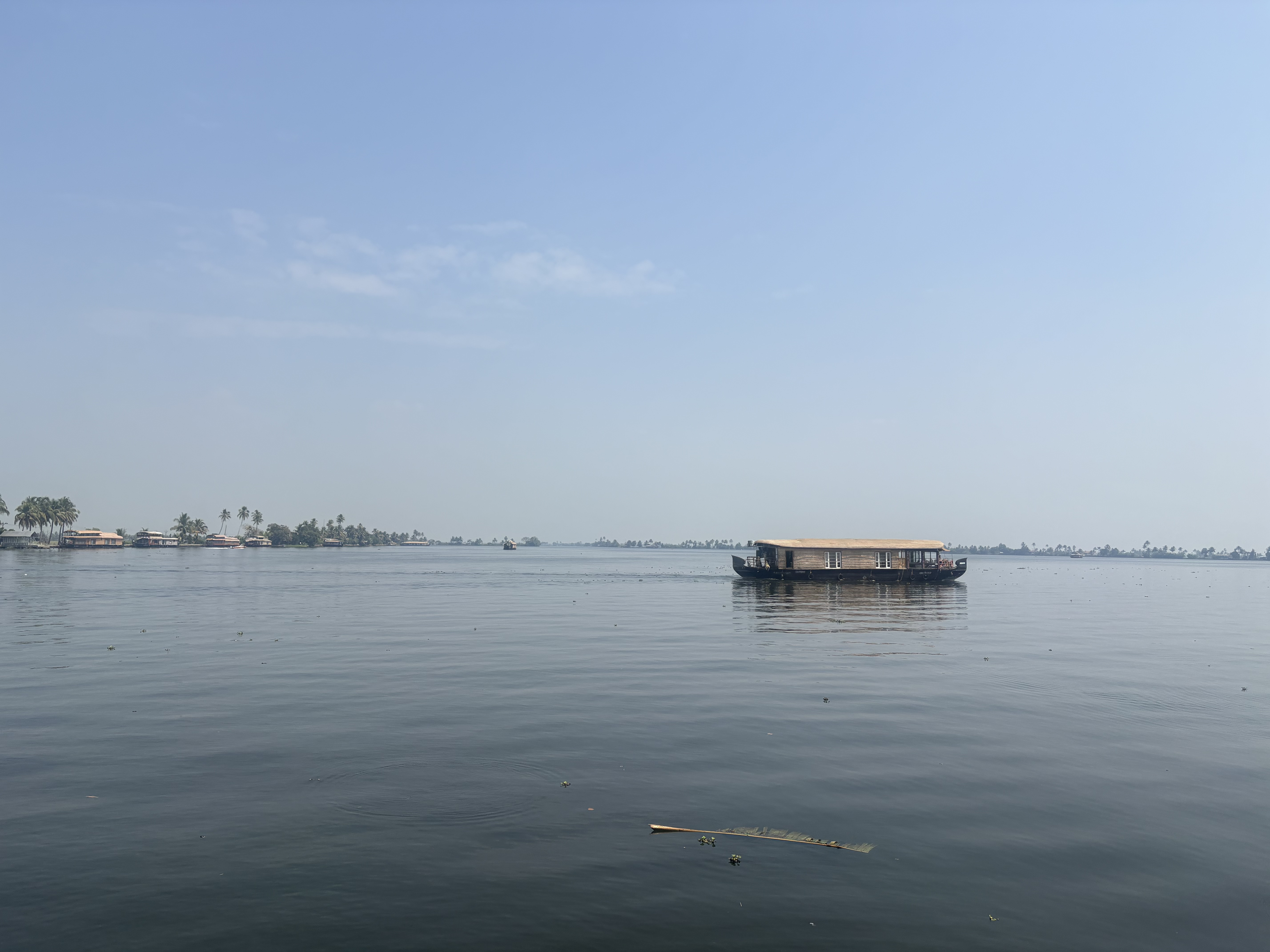
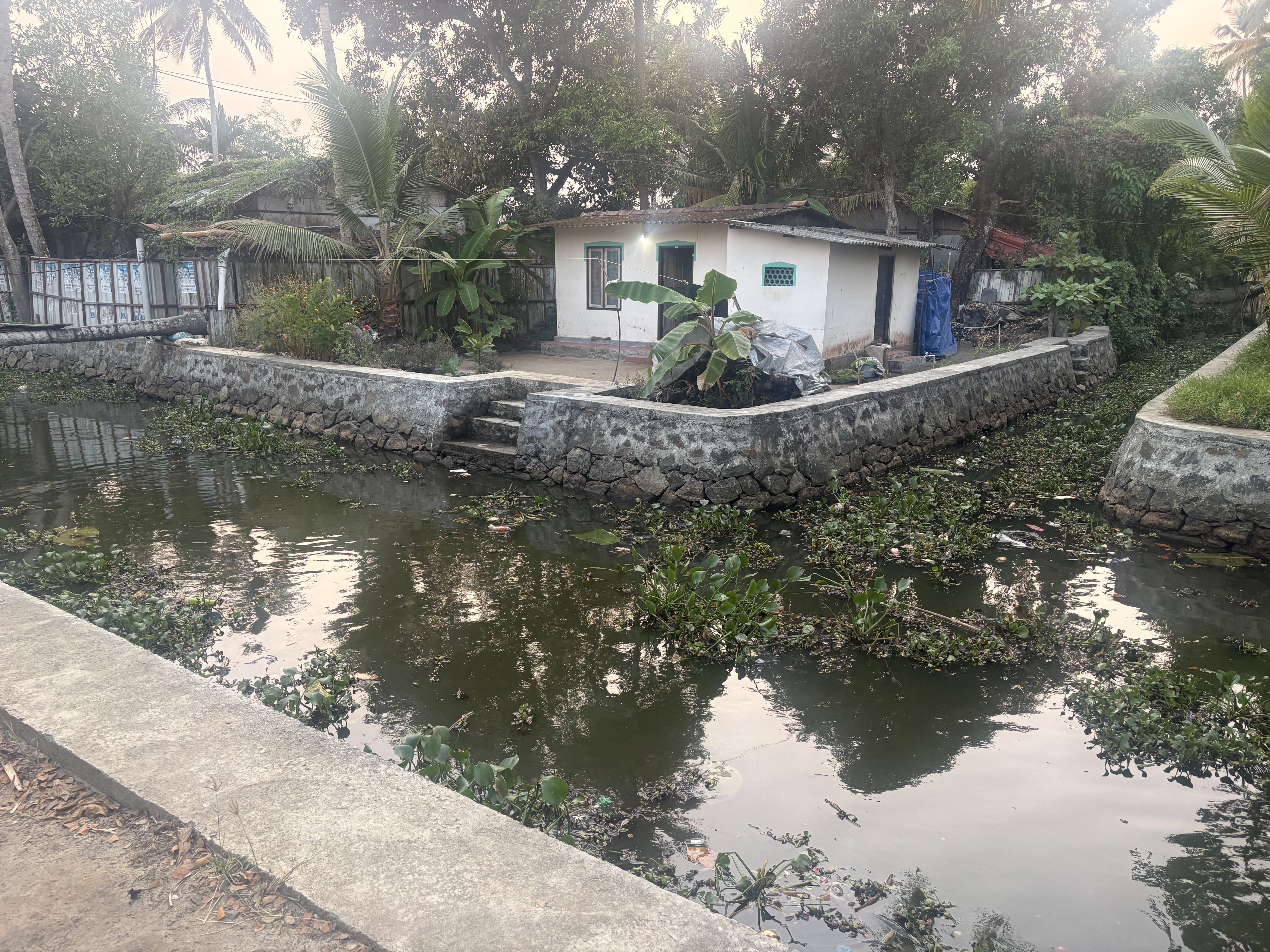
From Fort Kochi, a driver took us to the Alleppey backwaters, where we’d booked an overnight cruise on a houseboat. This was touted as the thing to do near Kochi, and I expected to be wowed by wildlife and beautiful scenery. But really, it was monotonous. It’s not that the backwaters aren’t beautiful — they are, in their way — it’s just that you’re slowly drifting, without much to look at, for a long time. We certainly saw no animals. On the other hand, we did disembark and walk through a canal-lined village, where we waved to friendly locals and got some much-needed steps.
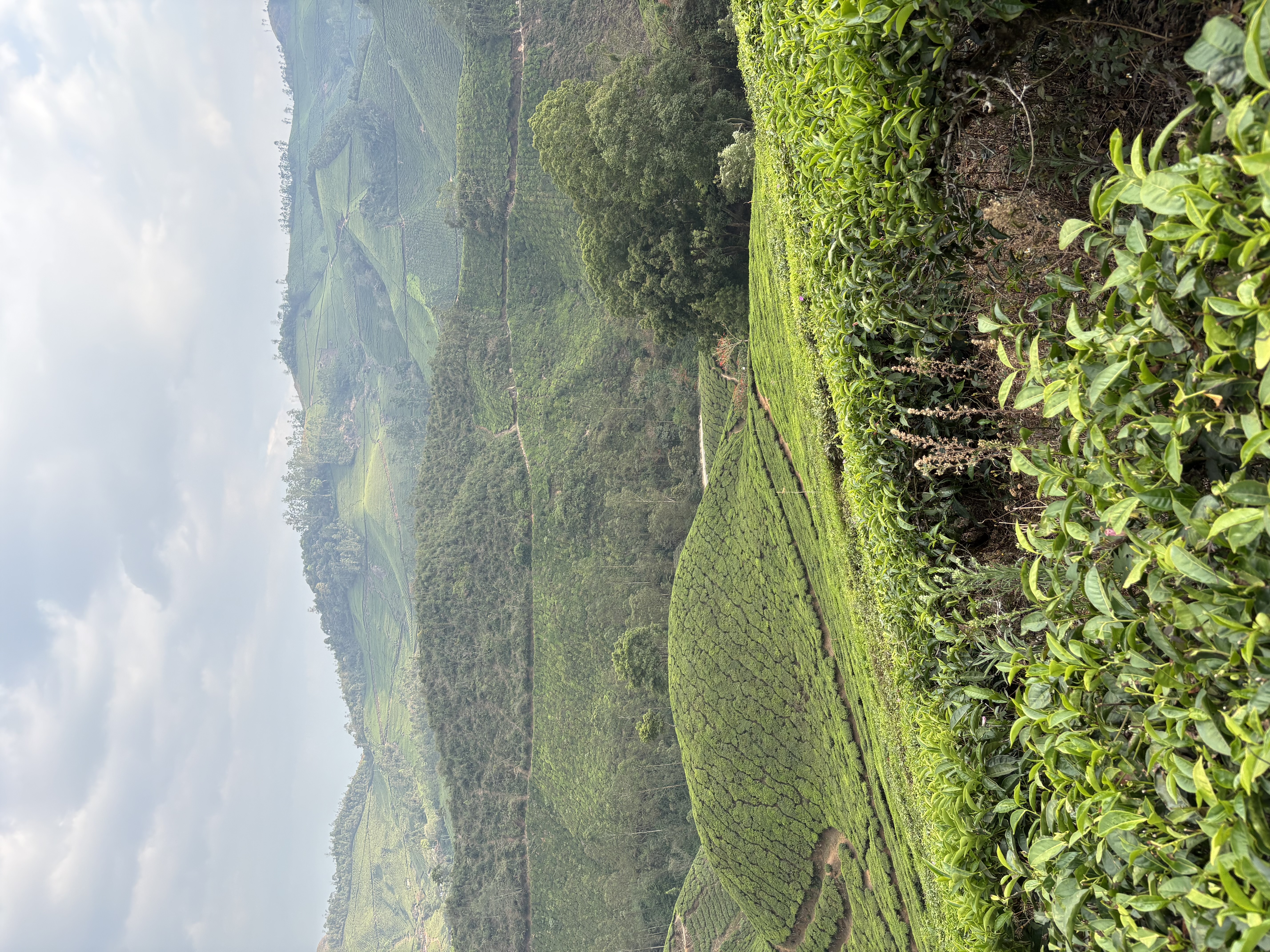
After our night on the backwaters, we drove to Munnar, a tea plantation area in the mountains inland from Kochi. I was excited to be in a place which wasn’t at all polluted. I was really impressed with Munnar: the natural beauty of the mountains is just spectacular (not to be annoying, but I was a little reminded of California), and the pruned tea bushes that spread on the mountain slopes as far as the eye could see — sometimes — added a unique element different from other mountain landscapes I’ve seen.
For the trip to Munnar — lasting a total of two nights — we hired a driver, Jomon, who had also driven us from Fort Kochi to Alleppey. That drive had been arranged by our homestay, where the owner, Saj, immediately requested that we cancel our Booking.com reservation so that he could avoid the 18% levy Booking.com charges. I was not entirely pleased about this because it gave us minimal recourse if our stay was subpar, but we acceded. Jomon seemed a competent driver with a decent grasp of English, so we asked how much he’d charge to chauffeur us to Munnar and back. Driving in India, I’ll note, is not for the feint of heart, and tourists should not try it themselves. There are very few stoplights; traffic rules are observed on an ad-hoc basis; and roads are narrow. Jomon quoted us 12,000 rupees, which seemed a bit high. I wanted to negotiate. My mom, however, misheard his quote, and tried to negotiate him down from 14,000 to 12,000. To this he happily agreed.
Of course, I’ve made plenty of my own faux paus on this trip: in Fort Kochi, I left my passport locked in the safe in Saj’s homestay. Good thing we had enlisted Jomon: he was able to pick it up when driving from Fort Kochi to Alleppey to pick us up for the drive to Munnar. As my mom told me this morning, it takes two to travel. Someone is always forgetting something.
Jomon told us he would sleep in his car during the two nights we spent in Munnar. This practice is apparently quite normal, but still, ouch. I guess he deserved 12,000 rupees.
In Munnar, we hiked through a tea plantation and learned about the process by which tea is produced in Munnar. Both men and women work in the tea plantations; men, for some reason, work half days, scattering ash on the plants’ roots as a kind of natural pesticide, and women work full days, picking tea leaves. We learned about the different leaves: small, rolled leaves make white tea, the most expensive sort of tea; slightly larger flat leaves are for green tea; and the largest leaves are for black tea. That helps explain the high price of white tea.
There are 26 tea plantations in Munnar, 25 of them owned by the Tata corporation. Tata is, I’d imagine, India’s oldest company, a sprawling multinational founded in the early 1800s with its fingers in everything from auto manufacture to tea production. The tour guides we talked to all but pledged fealty to Tata: it is a great company, they said, providing decent wages (500 or so rupees a day, or around $6) but also free housing and healthcare for its employees and education for their children. Not a bad deal!
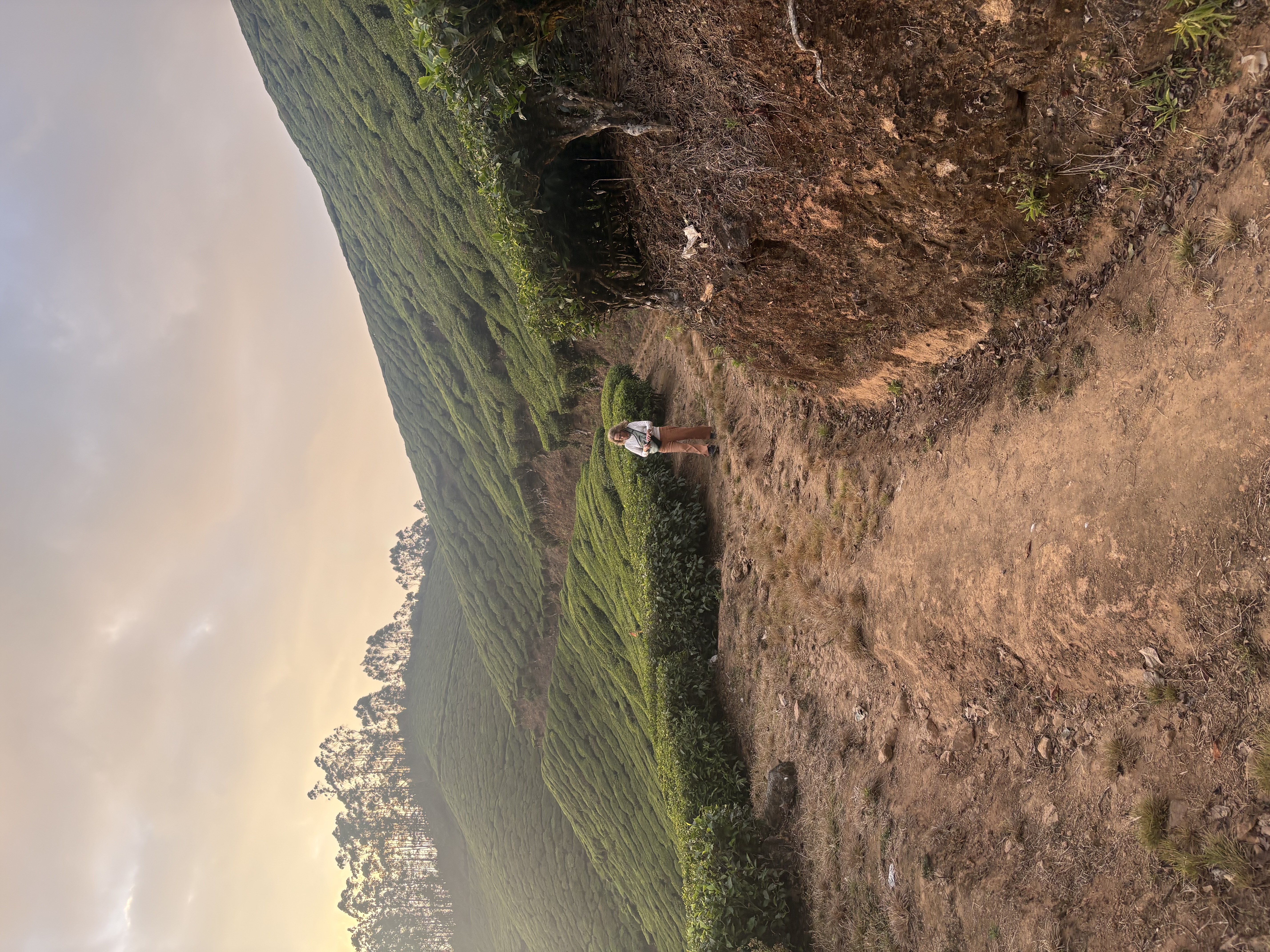
Around sunset, a Hindu temple began blaring out a call to prayer; amplified by the hills, it was incredibly loud. We watched the sunset obscured through clouds.
The next day we did a half-day trek along a ridge with a different tour guide and a French couple. We then toured a tea factory, the only one not owned by Tata. The Lockhart factory was established in the 1800s by the British but is now Indian-owned. The tour was really hard to follow because of the guide’s thick accent — a problem in general when traveling here — but I understood, at a high level, how the leaves are first “withered” in a deep bed through which hot air passes, draining them of moisture. At some point, they are also sifted by a machine that looks like a turbine, and leaves of the right size fall into the receptacles below. There are also computerized sorters that further sort the leaves by quality. I did not really understand how black, white and green tea leaves are separated from each other during this process, however.
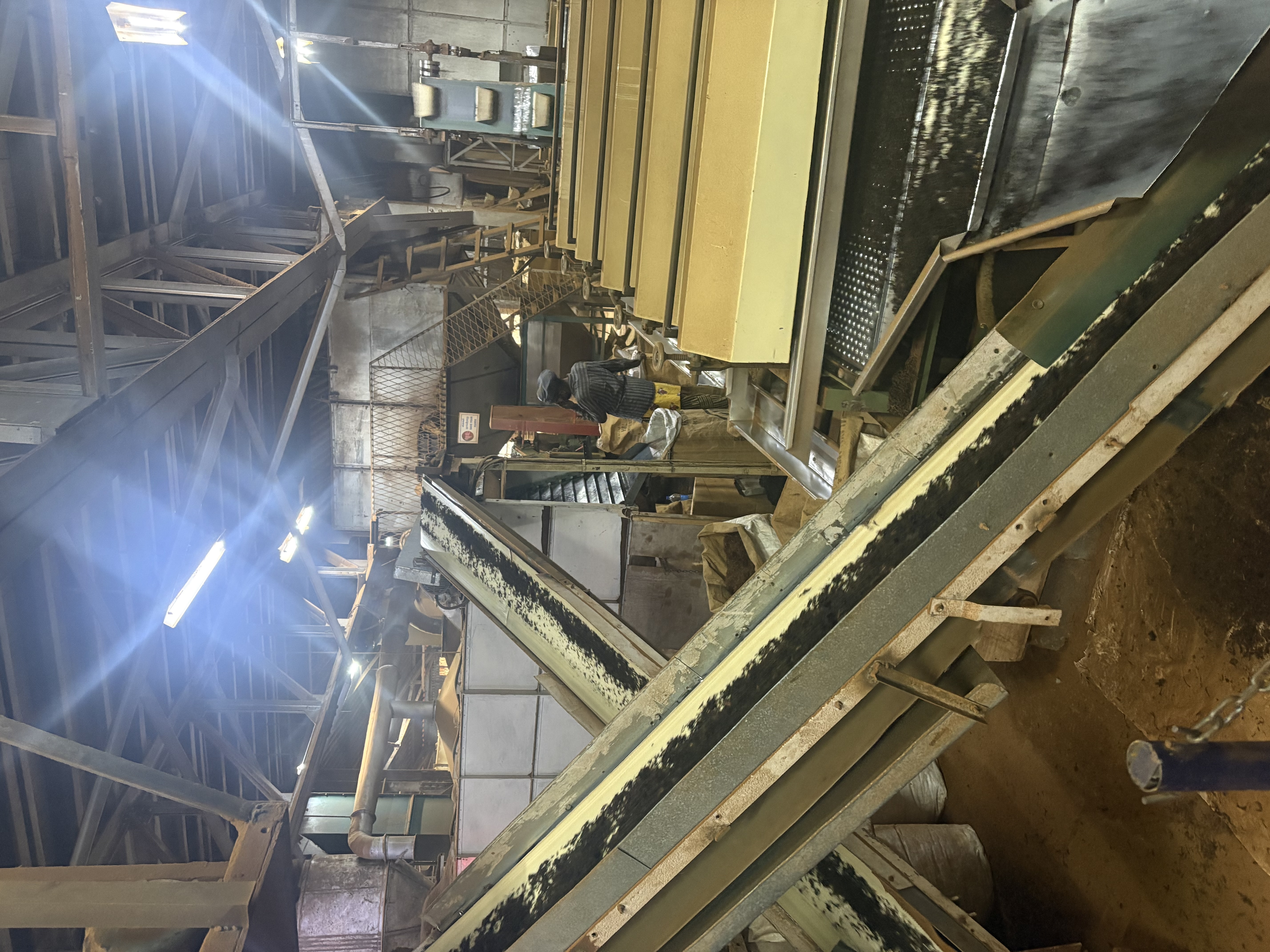
The tea we drank at Lockhart was just OK, I thought. I’ve enjoyed the Masala Chai I’ve had at breakfast more than most other tea I’ve had on this trip.
The next day, we drove back to Fort Kochi, to stay a night at an airport hotel before departing to Pondicherry. It’s important to break up travel days sometimes: had we tried to go from Munnar to Pondi in one day, it would have taken 10ish hours — 4 to drive to the airport, 3ish to navigate the airport and fly to Chennai, and another 3 to drive to Pondi.
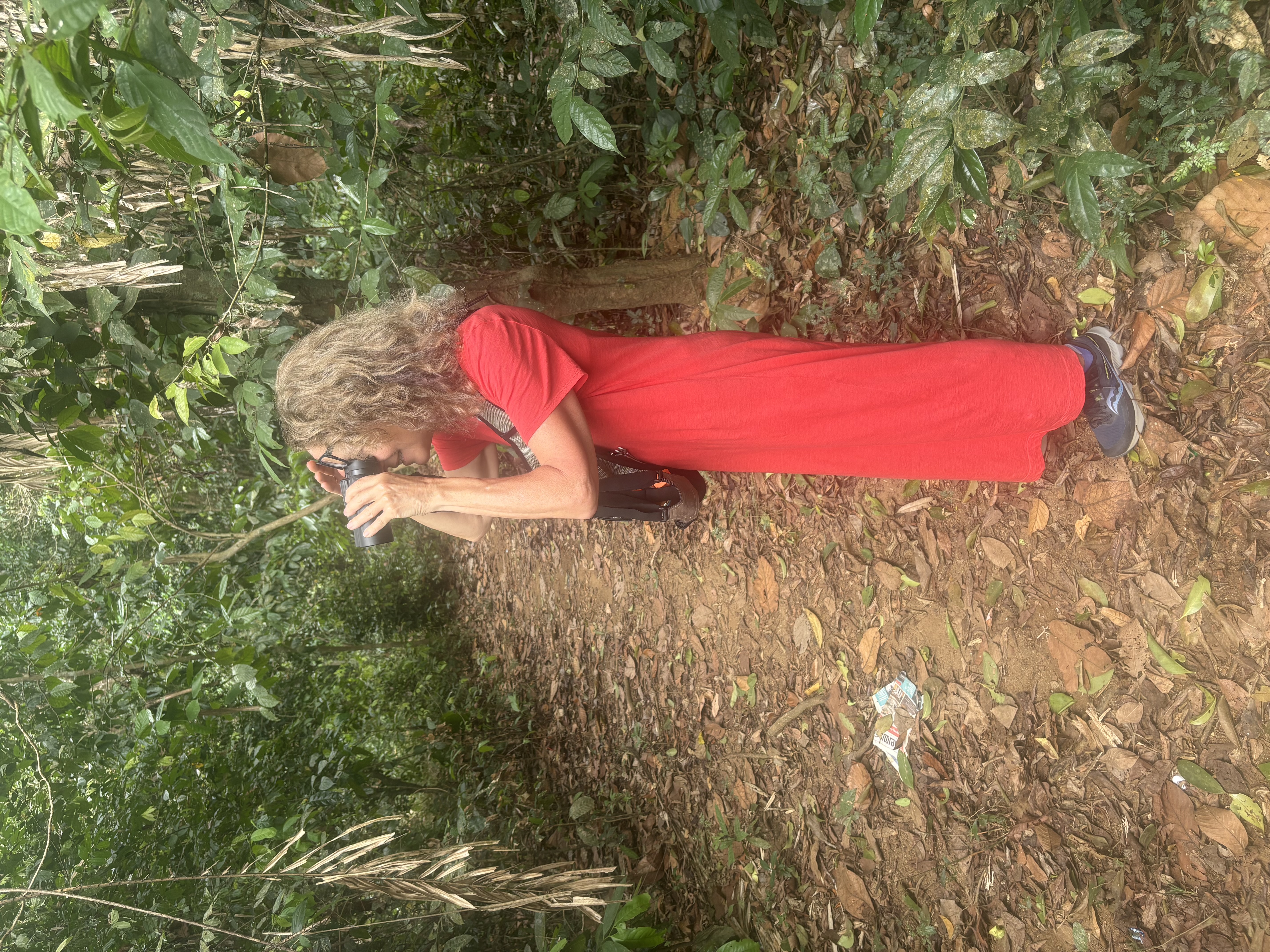
By breaking up the travel, we were also able to stop at a bird sanctuary on the way back from Munnar. I had never been birding before, but I was pleasantly surprised by our guide’s expertise — he could identify birds by their silhouettes and calls — and it was a thrill to lock the binoculars on a bird, however briefly. Very cool to be able to see in fine detail the bright colors of small birds nested in faraway trees.
We are now leaving Kerala for Pondicherry. I had hoped my trip would get more relaxing as I’ve traversed north to south, and that has been mostly true. While the north was interesting historically, it was a difficult place to be a tourist: chaotic and often loud. Here in the south things are calmer. As our guides said multiple times, “nice people in Kerala” and I found that to be true. Guides here might have a mild agenda, but they’re not trying to scam you in the way Delhi guides are. And while I was a little underwhelmed by Fort Kochi and the backwaters, Munnar was an overall highlight on this trip, a really beautiful place I’m glad I got to see.