Pondicherry, Auroville, and Western Spiritualism in India
I arrived in Pondicherry on Monday. We — my mom and I — flew into Chennai, a city of 13 million in south east India, and took a car from the airport. Pondicherry, or Pondi, is a small-ish town, by Indian standards: just one million people. Until 1962, it was a French colony for some two hundred years; prior to that, it was colonized by the British, Danish, Dutch and Portuguese. It’s on the tourist route because of the combination of French and Tamil influences, the sea-side atmosphere and the presence of a notable ashram and nearby spiritual community, Auroville (more on that later). Pondicherry ranked second in Lonely Planet’s places to visit recently.
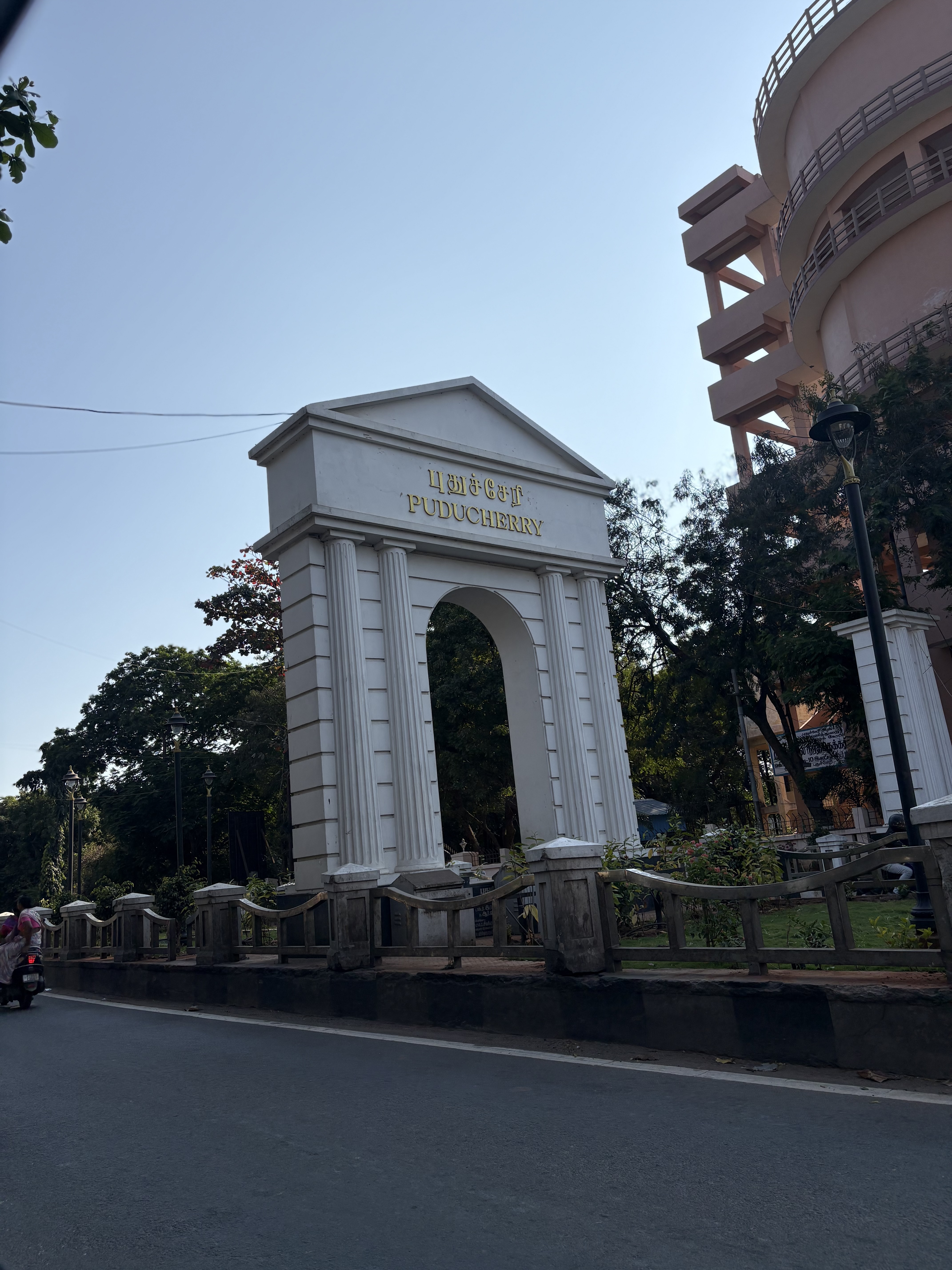
Well, apologies to Lonely Planet, but: what?! I enjoyed being in Pondicherry. There is some beautiful French/Tamil architecture, good food of both the continental and Indian varieties, and interesting spiritual influences. But I’m currently in Goa. Goa is a top tourist destination. You can’t even swim in (most of) the beaches in Pondi, as far as I can tell. And in terms of architecture and history, other parts of India have much more to see.
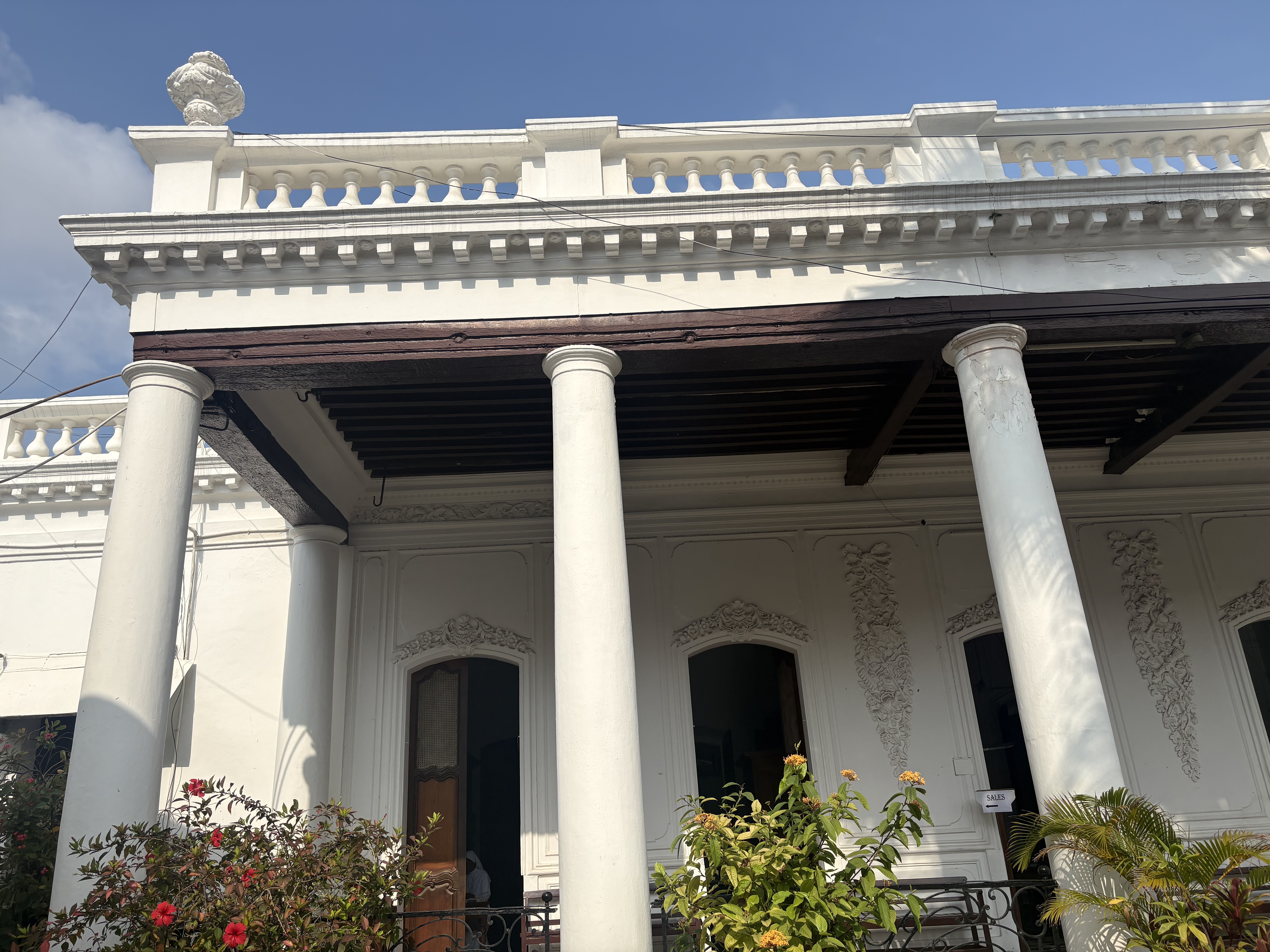
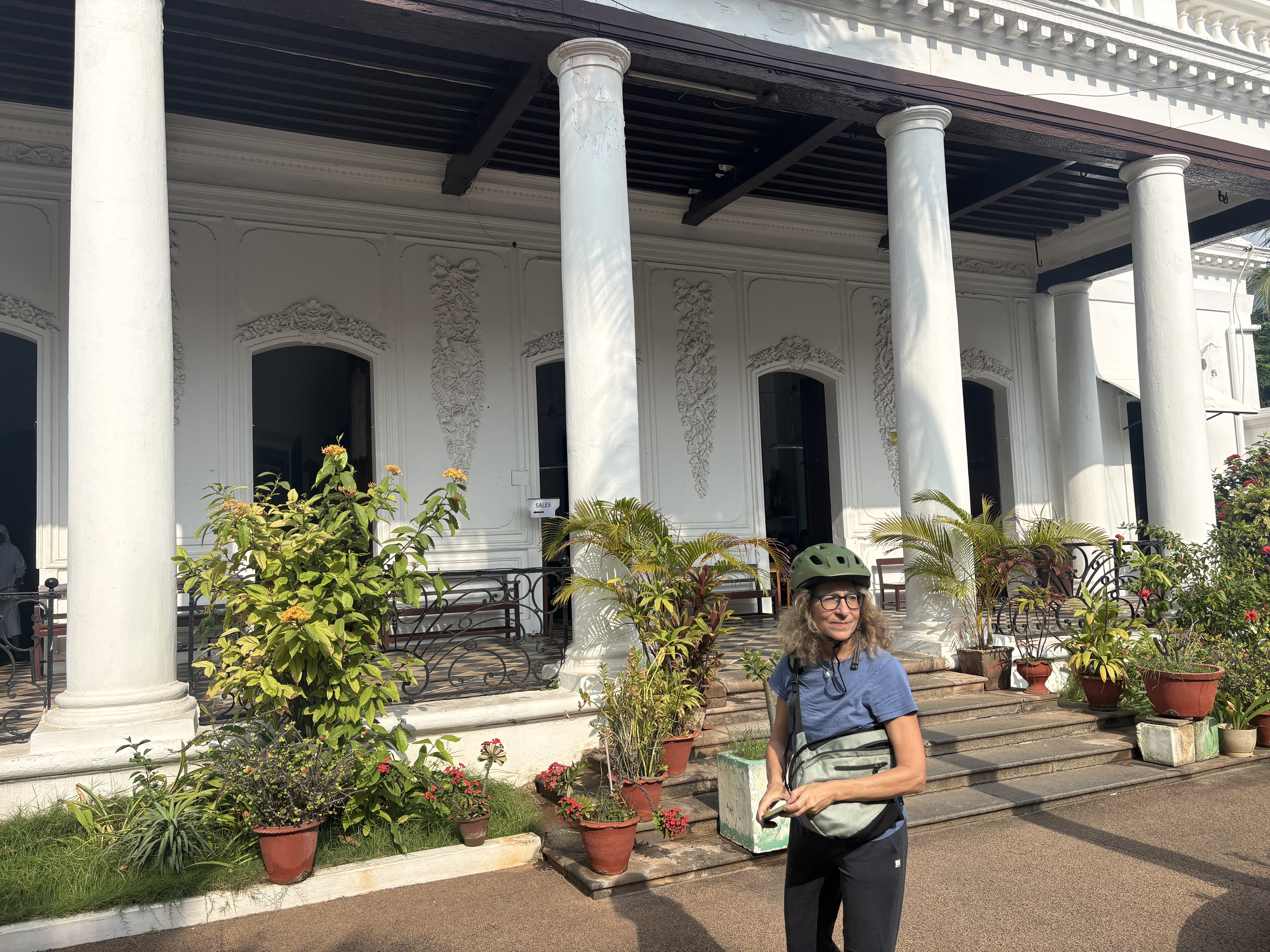
The truth is, as far as I was able to tell, Pondicherry was never that important to the French, and therefore not very developed by them. So, while there is nice architecture here and there, there’s not really that much to see. Much has become dilapidated, and many old buildings are fairly normal-looking. The beachside promenade is a nice walk on a warm day, of which there are many, but it’s just that.
A major draw for tourists to Pondi is the Sri Aurobindo Ashram, founded by the eponymous guru Sri Aurobindo. Aurobindo was an Indian, British-educated freedom fighter who came to Pondicherry after spending time in the Raj’s prisons for his political activities. In Pondicherry, he gave up freedom-fighting in favor of inner struggle, developing a new form of yoga called integral yoga that seeks to integrate eastern and western tradition (unclear what that means). To this end, Aurobindo and his backers created an Ashram in Pondy’s “White Town,” the old French quarter (named for its inhabitants, not its buildings). The Ashram occupies several blocks and is painted light blue; it also owns various other buildings throughout Pondicherry. To enter its central building, visitors must turn off their cell phones and take off their shoes; in a flower-strewn courtyard within, they engage in silent contemplation.
I will say this about spiritualism: it is nice to turn off your phone and engage in some quiet contemplation for a bit. Definitely relaxing.
In defense of the Ashram, it must bring a lot of tourism dollars to Pondicherry. It also resulted in the formation of a sort of intentional community about 30 minutes from the city: Auroville, created in 1968 by Aurobindo’s second-in-command and chief follower, “The Mother.” Mirra Alfassa was a French Jew who found spirituality in India before World War I and devoted her life to Aurobindo. She created Auroville with the idea that it would house some 50,000; today, the population is less than 4,000, half of them from outside India. Enlightenment, it turns out, is still rare.
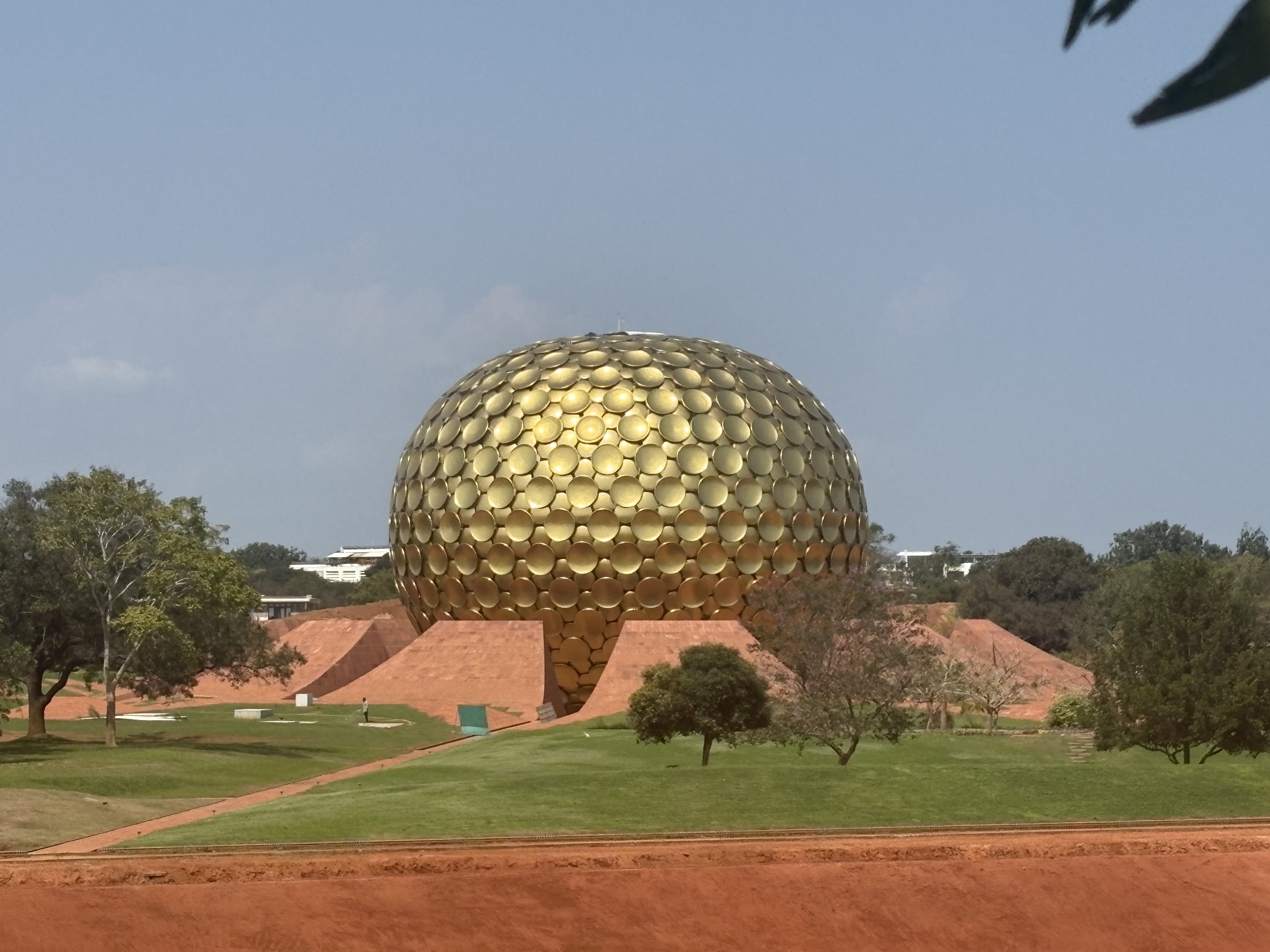
We visited Auroville twice: once for a tour given by a twentysomething who’d grown up there, and once to go inside the Matrimandir, a massive golden globe inside which pilgrims meditate. First, our tour: our guide showed us a sound garden, basically a garden with a bunch of sculptures that double as musical instruments; a spirulina factory; a store where we bought some bags; and a view of the Matrimandir from some ways away. He mentioned he’d last been inside the Matrimandir six years ago until recently, when he’d brought some German friends inside. No commentary at all about spiritual life within Auroville. Maybe we just got unlucky.
The next day we braved the long line to go inside the Matrimandir. The structure itself is quite impressive: a golden globe sculpted like a lotus in bloom. You enter through the bottom and ascend curving marble bridges to the meditation room. It’s totally silent — except for the occasional echoing cough — and watching the silent procession slowly ascending a distant bridge in the half-light, I couldn’t help think of the processions of the damned in the underworld, in Virgil or Dante. Sorry, I can’t help it: an English literature degree permanently warps your brain.
Within the meditation room, you can fix your attention on a crystal globe of “optical quality” pierced by a single ray of light.
Outside the Matrimandir, we learned this whole project is estimated to cost 18 million dollars when complete. That’s quite a low price tag by US standards, and suggests that Auroville was only possible in India or a place like it: cheap labor and cheap land are as usual a prerequisite for enlightenment.
Sorry I’m ribbing on these people. It’s just too easy. To be clear, it’s not spirituality or meditation I take issue with — it’s the pomp and the cult of personality around The Mother and Aurobindo. I know many smart people take this kind of thing seriously. It’s just not for me.
After the Matrimandir, we had to travel back to Chennai where we’d spend a night at a friend-of-a-friend’s hotel before departing: me to Goa, my mom to Bombay. We did not, however, book our train tickets in advance. It turns out the only berth you can buy tickets for day-of at the station is the “unreserved” class: the lowest class in the train. So we were jammed into a crowded car. People were sitting on the floor and on the luggage racks above us. A couple on the floor alternately cuddled and smacked each other. Very young women held their babies. But people were quite nice to us, helping make sure we had a place to sit. We sat with what seemed like a family or a group of close friends, who splayed their legs atop each other seemingly both out of affection and necessity. After three hours, we were happy to disembark.
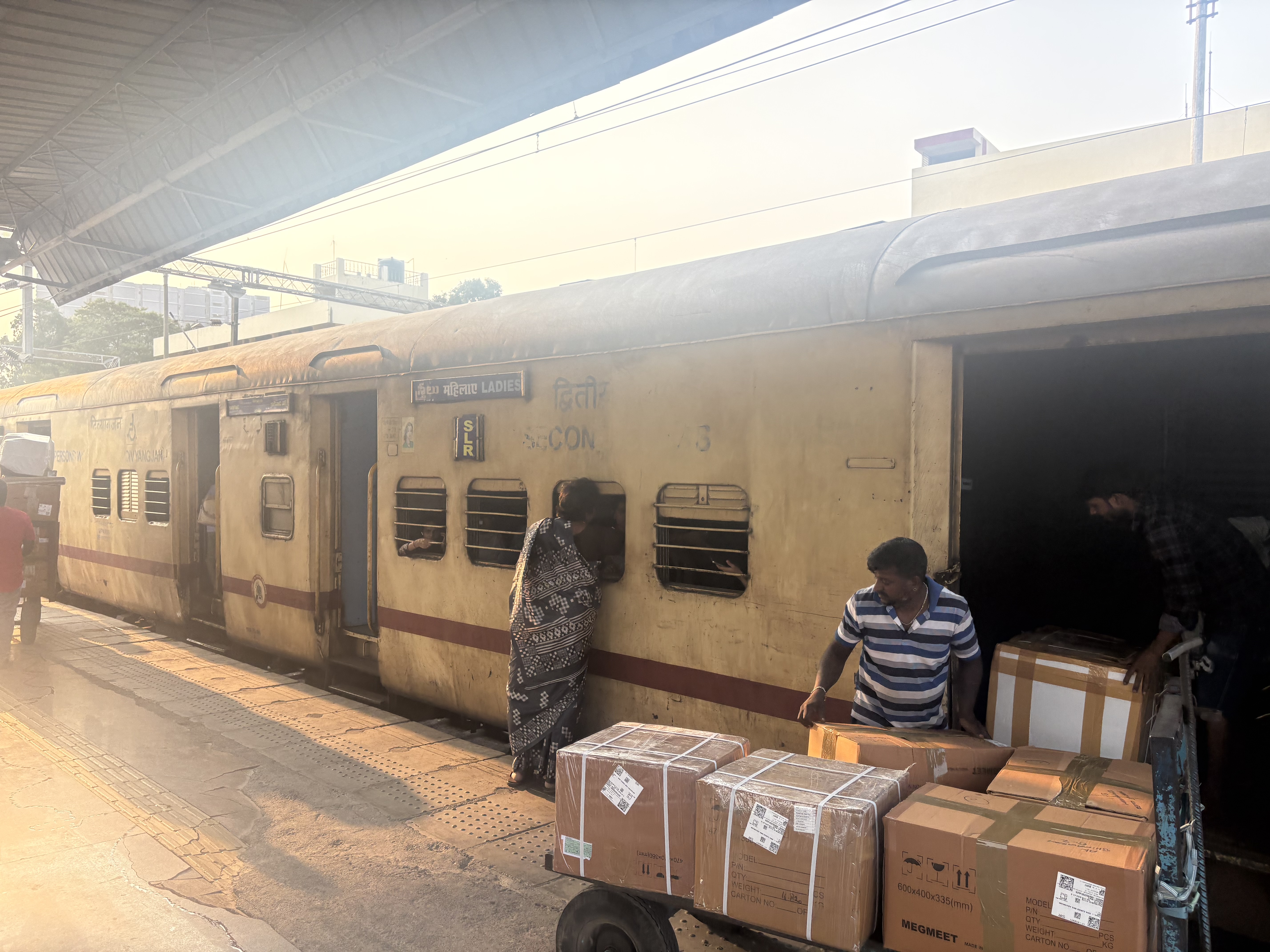
And then we were in Chennai, and now I’m here, in Goa, back on my own. Goa, so far, is lovely. I’m writing this from a table while looking out on a beach, the first beach I’ve been able to swim at in India. The water is warm; the sunset last night stunning. I know Goa is an overplayed tourist destination, but there’s a reason for that!
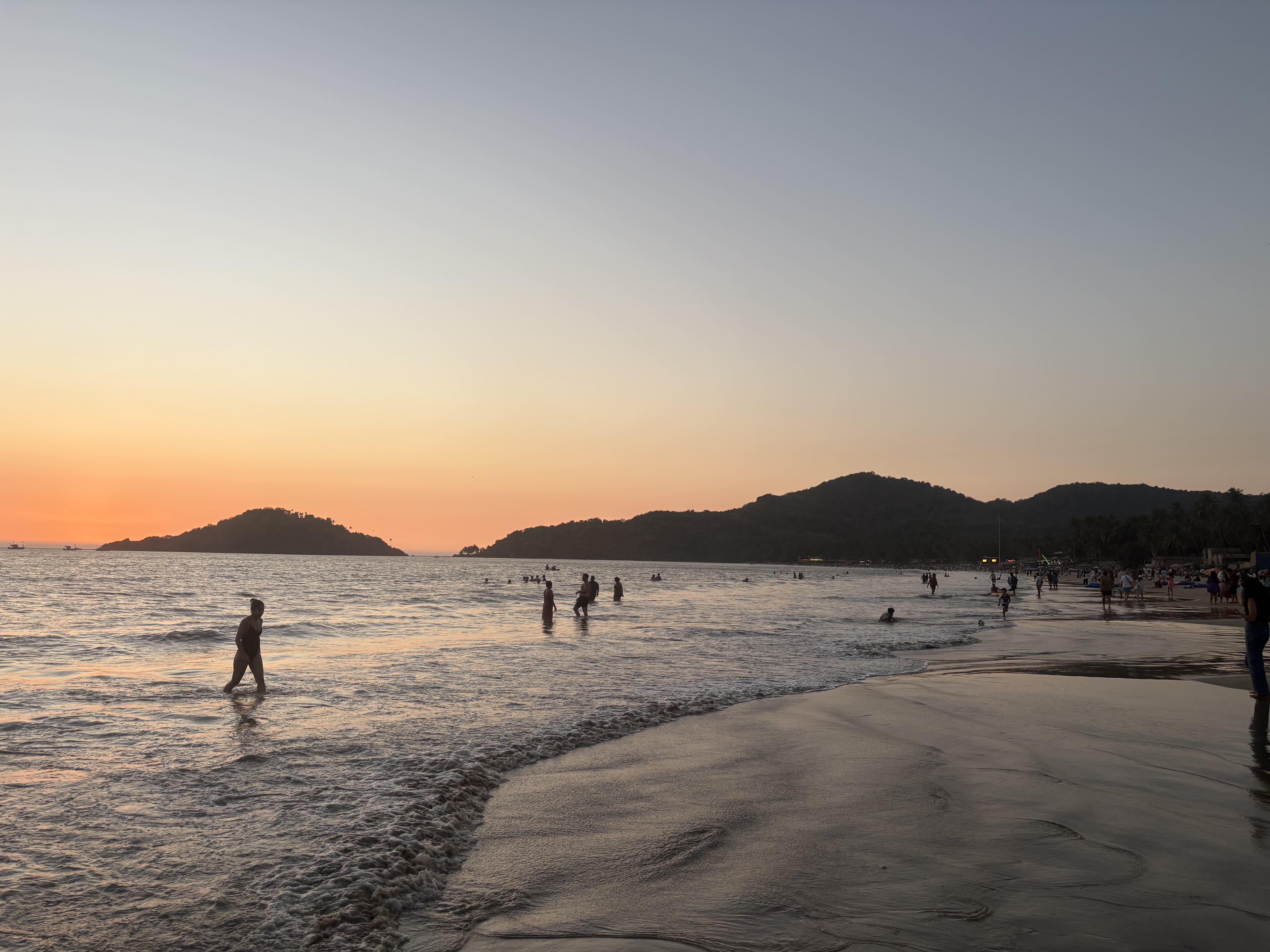
It’s disturbing to imagine that once the beaches at Pondicherry, Kochi and Bombay were as scenic as this one, before the trash and pollution. We humans love to say how progress marches forward, how we’re always improving things — one direction, up — and there are ways in which we undoubtedly are, but the whole story isn’t so simple. Visiting India has really driven home to me how much more we in the West have benefited from industrialization than the billions whose colonization, to a real extent, made industrialization possible. And yes, things are improving. But there’s a long way to go.